Monday, March 26, 2012
What Happened In Those Fourteen Years??
In Pericles, Prince of Tyre, many people question what happened in the fourteen year gap. Personally, I think that the gap occurred plot-wise so that Marina could mature more in order to fulfill her role in the plot; however, if I was to make the story more interesting and add to the "epic" quality, I would have Pericles spend the years looking for the casket at the bottom of the ocean where he thinks his wife's body should be. Having the gap filled in by this would also lead on to more qualities about Pericles. The ocean is vast, mysterious, and terrifying. The reader/audience can draw a conclusion about the degree of Pericles's bravery for diving into the very heart of uncertainty. The ocean may once again swallow up Pericles and spit him ashore, and Pericles meets the soldiers in the second part of the play where he verifies his identity since he looks like a madman.

Thursday, March 22, 2012
Narration
Today in this blog post, I feel like discussing the arguments concurring with the importance of narration in Pericles, Prince of Tyre. The first argument I would like to discuss is the argument I accidentally stumbled upon in class today: narration adds a legendary quality that adds to the epic personality of the play itself. The narration adds to the play's granduer because the nature of narration intrinsically implies oral tradition, i.e., the story was passed down via word of mouth through generation after generation etc. Something absolutely incredible must have happened for people to keep orally passing this story down every generation, right? When one wanted to catch the awe of others, he would revert to an epic journey such as Pericles, Prince of Tyre.
Secondly, narration is important in a play such as Pericles, Prince of Tyre because the narrators provide background information so that the audience understands the context of the play and why certain characters might make the decisions that they do. The narrator can also fill in gaps in the story that are not in the play so that the audience can further understand the context of the next scene or so. Additionally, I think that the audience may be able to better understand what a narrator says in comparison to the other characters. The emotion (like anger) an actor may be portraying would distract the audience from giving their full attention to the words the actor is saying; however, a narrator is usually unmoving or not physically dynamic but instead verbally dynamic, allowing the audience to further concentrate on the words they are hearing.
Secondly, narration is important in a play such as Pericles, Prince of Tyre because the narrators provide background information so that the audience understands the context of the play and why certain characters might make the decisions that they do. The narrator can also fill in gaps in the story that are not in the play so that the audience can further understand the context of the next scene or so. Additionally, I think that the audience may be able to better understand what a narrator says in comparison to the other characters. The emotion (like anger) an actor may be portraying would distract the audience from giving their full attention to the words the actor is saying; however, a narrator is usually unmoving or not physically dynamic but instead verbally dynamic, allowing the audience to further concentrate on the words they are hearing.
Wednesday, March 21, 2012
The Importance of Central/Essential Metaphors
To be completely frank, I do not fully grasp the idea of what exactly a central or essential metaphor is. Even after some attempts of finding an answer online, the general consensus is that a central metaphor is the most basic form of a metaphor. (for example, "the clouds are white marshmellows").
However, thinking about the discussion in class today, I doubt that the blog post has a deeper meaning than the most basic version of a metaphor. I think that a central metaphor is any metaphor in the play that ties the play together. In other words, I want to write about the metaphors for major themes/ components in the play.
The most fascinating metaphor to me is how life is compared to Pericles's journey. I feel that Shakespeare is probing at the idea of the necessity of self-exploration. Pericles left his kingdom in fear of being killed by assassins from Antioch; thus, he was forced to learn who he really was. Just like in life, Pericles's journey had many bumps in the road, but sometimes these bumps are beneficial in making someone more resilient. Pericles nearly had everything he desired in life, but then a storm wrecks his ship. The sea takes Pericles and spits him upon the shore with absolutely nothing. This instance resembles the common metaphor in the play of rebirth. Pericles was reborn because he is literally starting over from nothing. Pericles proves to be a very humble and persistent individuals as he never belittled those who he met, such as the fishermen, with his nobility status (although Pericles would have a difficult time claiming his identity). As the play unfolds, the new qualities Pericles will discover he has further promotes the central metaphors of life and rebirth. Perhaps Shakespeare urges for people to undertake a personal journey of their own and learn of their true inner-person.
However, thinking about the discussion in class today, I doubt that the blog post has a deeper meaning than the most basic version of a metaphor. I think that a central metaphor is any metaphor in the play that ties the play together. In other words, I want to write about the metaphors for major themes/ components in the play.
The most fascinating metaphor to me is how life is compared to Pericles's journey. I feel that Shakespeare is probing at the idea of the necessity of self-exploration. Pericles left his kingdom in fear of being killed by assassins from Antioch; thus, he was forced to learn who he really was. Just like in life, Pericles's journey had many bumps in the road, but sometimes these bumps are beneficial in making someone more resilient. Pericles nearly had everything he desired in life, but then a storm wrecks his ship. The sea takes Pericles and spits him upon the shore with absolutely nothing. This instance resembles the common metaphor in the play of rebirth. Pericles was reborn because he is literally starting over from nothing. Pericles proves to be a very humble and persistent individuals as he never belittled those who he met, such as the fishermen, with his nobility status (although Pericles would have a difficult time claiming his identity). As the play unfolds, the new qualities Pericles will discover he has further promotes the central metaphors of life and rebirth. Perhaps Shakespeare urges for people to undertake a personal journey of their own and learn of their true inner-person.
Monday, March 19, 2012
My Favorite Epic: The Legend of Zelda
My favorite epic story without a doubt is the Legend of Zelda. The Legend of Zelda is practically my childhood due to the fact that as a young whipper-snapper I was glued to my television and my Nintendo64 console. On the Nintendo 64, the two most popular Zelda epics are "The Legend of Zelda: Ocarina of Time" and "The Legend of Zelda: Majora's mask"; however, I will be discussing "The Legend of Zelda: Ocarina of Time" since that is my most favorite of the two.
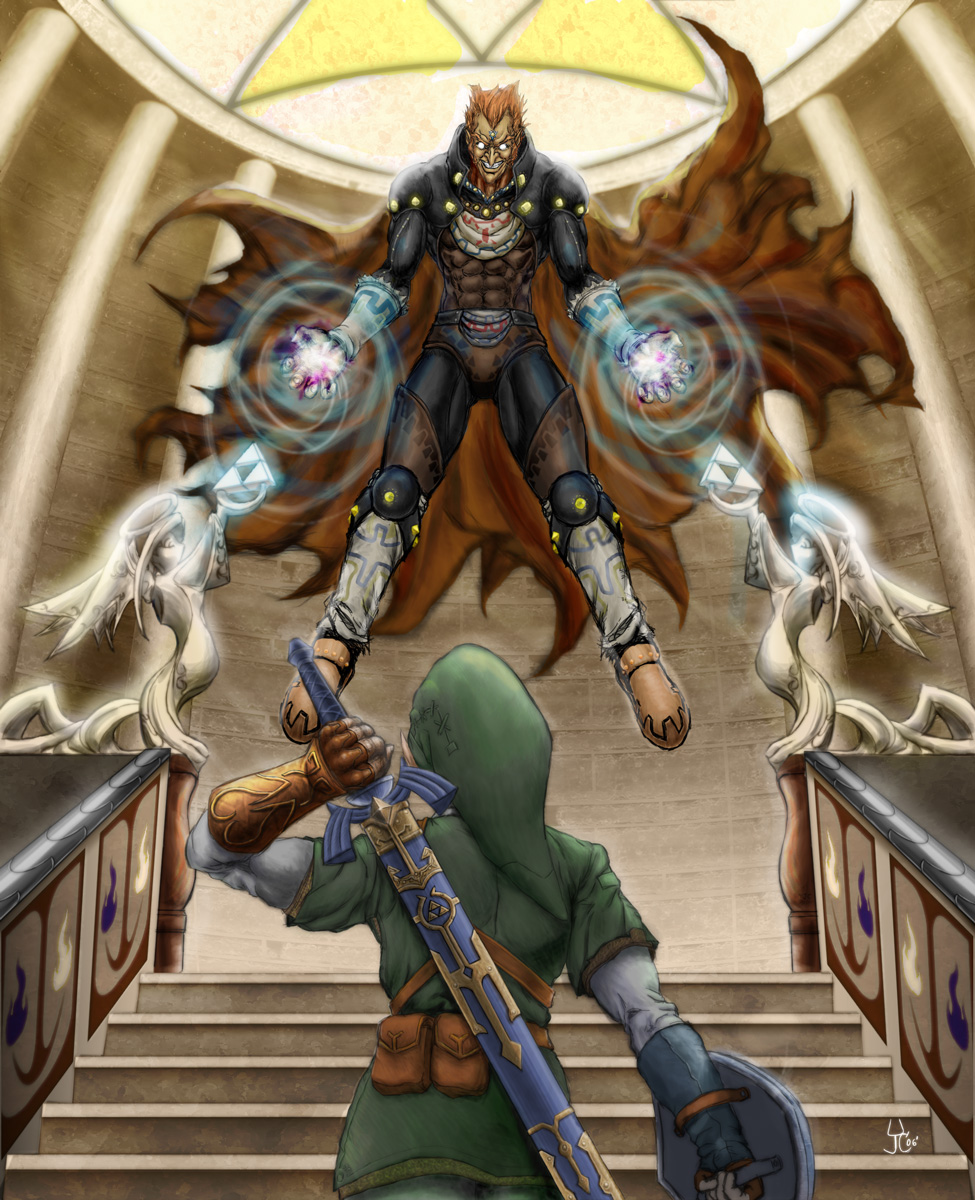
Oddly enough, either version of the Legend of Zelda is about a character named Link, and Zelda is the princess that he saves. In the Ocarina of Time, princess Zelda of Hyrule is abducted by an evil, grotesque villain named Gonandorf. Link sleeping in his quite home in the Mysterious Woods meets with his new traveling companion, the winged Navi, and the two set off on an epic quest which unavoidably turns into a rescue mission to save the princess. Link battles and solves riddles through dark dungeons, picturesque villages, the heart of a volcano, the bottom of a lake, a haunted desert, a magical forest, a giant tree, the belly of a beast, and even through time. Throughout the story, Link acquires supernatural abilities which even further enhance the epic. Such example is his transformation into a Zora:

Link travels all throughout the kingdom of Hyrule so advance upon Gonandorf where the hero and villain finally meet. Like any timeless epic, Link and Gonandorf create an incredible climax through a dynamic duel.
 Link wins the challenging battle with the villain and rescues Zelda; in doing so, Link restores order in Hyrule.
Oddly enough, either version of the Legend of Zelda is about a character named Link, and Zelda is the princess that he saves. In the Ocarina of Time, princess Zelda of Hyrule is abducted by an evil, grotesque villain named Gonandorf. Link sleeping in his quite home in the Mysterious Woods meets with his new traveling companion, the winged Navi, and the two set off on an epic quest which unavoidably turns into a rescue mission to save the princess. Link battles and solves riddles through dark dungeons, picturesque villages, the heart of a volcano, the bottom of a lake, a haunted desert, a magical forest, a giant tree, the belly of a beast, and even through time. Throughout the story, Link acquires supernatural abilities which even further enhance the epic. Such example is his transformation into a Zora:

Link travels all throughout the kingdom of Hyrule so advance upon Gonandorf where the hero and villain finally meet. Like any timeless epic, Link and Gonandorf create an incredible climax through a dynamic duel.
Monday, February 20, 2012


Blog 6: My Soliloquy
"This argument causes my current pain
As useless as quarreling with a child - simile
Why I reserved to such extreme measures -meaningful deviation
To win a cause that has trivial worth
I drugged her mind to make fool of my queen - POA
Love looks not with the eyes, but with the mind - antithesis
My drug set free her mind and her love free
Now she act different than she had 'round me
What have I done drugging my queen's pure mind?- rhetorical question
Seeing so true her actions with free mind
Love pure love I wish she'd love me like now -meaningful deviation - troche
How she act so different when in love -meaningful deviation
So I sadden like men who lost the war - metaphor/imagery
Then she never truly for me felt love
I will not drug her mind and force her love - climax
As love has no predictability
I seek her love but must let my queen be"
Writing this Soliloquy was a much easier process than I had thought it was going to be. I know that many of my peers struggled writing their soliloquies as I was astonished when hearing the amount of time it took for them to compose their soliloquies. The words seemed to flow out of my hand when I just thought about the overall plot of the play and then placed myself in the perspective of Oberon. Once truly focusing on the emotions and thoughts going through Oberon's head, writing the soliloquy was enjoyable and quick! Although I am overall pleased with the outcome of the soliloquy, one thing that I wish my soliloquy could improve upon was conveying the jealousy and astonishment when Oberon saw Titania in true love.
As useless as quarreling with a child - simile
Why I reserved to such extreme measures -meaningful deviation
To win a cause that has trivial worth
I drugged her mind to make fool of my queen - POA
Love looks not with the eyes, but with the mind - antithesis
My drug set free her mind and her love free
Now she act different than she had 'round me
What have I done drugging my queen's pure mind?- rhetorical question
Seeing so true her actions with free mind
Love pure love I wish she'd love me like now -meaningful deviation - troche
How she act so different when in love -meaningful deviation
So I sadden like men who lost the war - metaphor/imagery
Then she never truly for me felt love
I will not drug her mind and force her love - climax
As love has no predictability
I seek her love but must let my queen be"
Writing this Soliloquy was a much easier process than I had thought it was going to be. I know that many of my peers struggled writing their soliloquies as I was astonished when hearing the amount of time it took for them to compose their soliloquies. The words seemed to flow out of my hand when I just thought about the overall plot of the play and then placed myself in the perspective of Oberon. Once truly focusing on the emotions and thoughts going through Oberon's head, writing the soliloquy was enjoyable and quick! Although I am overall pleased with the outcome of the soliloquy, one thing that I wish my soliloquy could improve upon was conveying the jealousy and astonishment when Oberon saw Titania in true love.
Blog 5: The Nature of Love
I would like to start this blog by beginning that love cannot be described with one aspect sufficiently, for the many characteristics and qualities of love make linking the intangible with tangible words a most difficult task. Shakespeare criticizes what was traditionally thought of as love in his time when marriages were prearranged. The bride and groom often had little to no interest in each other and often married for political reasons especially in the nobility. I think Shakespeare represents this aspect of "love" through Egeus who essentially attempts to force his own daughter, Hermia, into marrying a man she is not interested in, Demetrius. Demetrius desires to marry Hermia because Hermia's father is very wealthy and will pay a large dowry to the man who marries his daughter.
Shakespeare then gives the perception that "love is blind." Blind is an interesting word choice to describe love because blind implies the presence of little to no reason and uncontrollable. Cupid's love juice shows how love can be blind as with a simple drop the eye, both Lysander and Demetrius fall madly in love with Helena. I think that in this manner Shakespeare depicts an insipid or even almost silly side of love. It seems that when Shakespeare discusses blind love, extreme hyperboles and elaborate poems are smoothered upon the recipient which are to a degree comical.
Then Shakespeare depicts what is classically known as true love through the character Hermia. Sonnet 116 states the qualities of true love; "it is an ever-fixed mark, it is the star to every wand'ring bark." Throughout the whole play, Hermia keeps her love for Lysander. Through all the drama that develops in the plot, Hermia's love does not change for Lysander even when Lysander, in his Cupid juice rage, disrespects and treats Hermia in shocking ways.
Shakespeare then gives the perception that "love is blind." Blind is an interesting word choice to describe love because blind implies the presence of little to no reason and uncontrollable. Cupid's love juice shows how love can be blind as with a simple drop the eye, both Lysander and Demetrius fall madly in love with Helena. I think that in this manner Shakespeare depicts an insipid or even almost silly side of love. It seems that when Shakespeare discusses blind love, extreme hyperboles and elaborate poems are smoothered upon the recipient which are to a degree comical.
Then Shakespeare depicts what is classically known as true love through the character Hermia. Sonnet 116 states the qualities of true love; "it is an ever-fixed mark, it is the star to every wand'ring bark." Throughout the whole play, Hermia keeps her love for Lysander. Through all the drama that develops in the plot, Hermia's love does not change for Lysander even when Lysander, in his Cupid juice rage, disrespects and treats Hermia in shocking ways.
Subscribe to:
Posts (Atom)